Wirefly helps you save on cell phones and plans by offering innovative comparison tools so consumers can make educated choices. Start saving today with Wirefly!
Wirefly helps you save on Internet service by offering innovative comparison tools to compare Internet providers in your area.
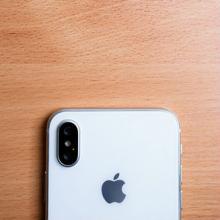
As reported recently by Business Korea, it appears that Apple is reducing the quantity of parts and components it is ordering from its suppliers for one of its 2017 flagship devices, the iPhone X, further adding fuel to the notion that the model will indeed be discontinued later this year (likely as soon as the new 2018 iPhone models are introduced).
Not many people realize this, but Apple actually sources the iPhone X’s organic light emitting diode (OLED) display screens from Samsung (specifically from the company’s Samsung Display segment). But some time last month, Samsung Display had apparently told its partner firms to reduce the production output of iPhone X parts.
It turns out that for the first three months of this year, Apple is only ordering 20 million units of components for the iPhone X, as opposed to the expected 40 million, according to Samsung Display. And by the second quarter of the year, that order of 20 million units will again be reduced by half.
Based on the fact that Samsung Display is the only manufacturer of OLED displays that Apple is partnering with for its iPhone X, the amount of screen orders it is receiving should reasonably reflect the production levels of the iPhone X in the new few months. While it is true that for the iPhone, the first six months of any given year are usually not considered peak months, which means that production levels tend to be relatively lower in the first and second quarters, as compared to the third and most especially, the fourth quarter (in order to be ready for the busy holiday shopping season). For this year, however, production for the iPhone X appear to be declining to levels lower than what is generally expected.
The iPhone X may bite the dust before this year is over, but still, it has played a significant part in recently allowing Apple to post a highly profitable fourth quarter (despite a slight dip in iPhone unit sales year over year). According to a new report by IDC, the tech giant has managed to grab the highest market share in worldwide smartphone sales during the final quarter of 2017.
By shipping 77.3 million units of its iPhone devices in Q4 2017, Apple captured a 19.2 percent market share, and in the process, beat fierce rival Samsung’s market share of 18.4 percent (thanks to a global shipment volume of 74.1 million units of smartphone devices). Samsung is considered the top smartphone vendor in the planet, and for the first three quarters of 2017, it was the undisputed industry leader in terms of market share. But during the holidays, Apple has overtaken the South Korean phone maker.
Still, Samsung ended 2017 as the year’s biggest seller of smartphones, with shipments hitting 317.3 million units (up 1.9 percent compared to the previous year’s) versus Apple’s 215.8 million units. Completing the top five for the whole year are Huawei (with 153.1 million units), Oppo (111.8 million units, and Xiaomi (92.4 million units).
Wirefly offers great deals on a large selection of smartphones, cell phones, tablets, mobile hotspots, and other wireless devices for the nation's most popular carriers. Use Wirefly’s innovative cell phone and plan comparison tools to ensure you are getting the best deal on the market. Shop with confidence knowing that Wirefly wants to help you find the best prices on cell phones, cell phone plans, TV, and Internet service.